
Western Tragopan Birding Expedition — Great Himalayan National Park: 6 Nights/7 Days
No. of days
7
Trip Type
Birding
Activity Level
Moderate
Experiences
Best time
October to April
Region
Request free consultation
Our travel planning team will contact you to provide personalized guidance. Submission confirms your acceptance of our privacy policy.
Overview
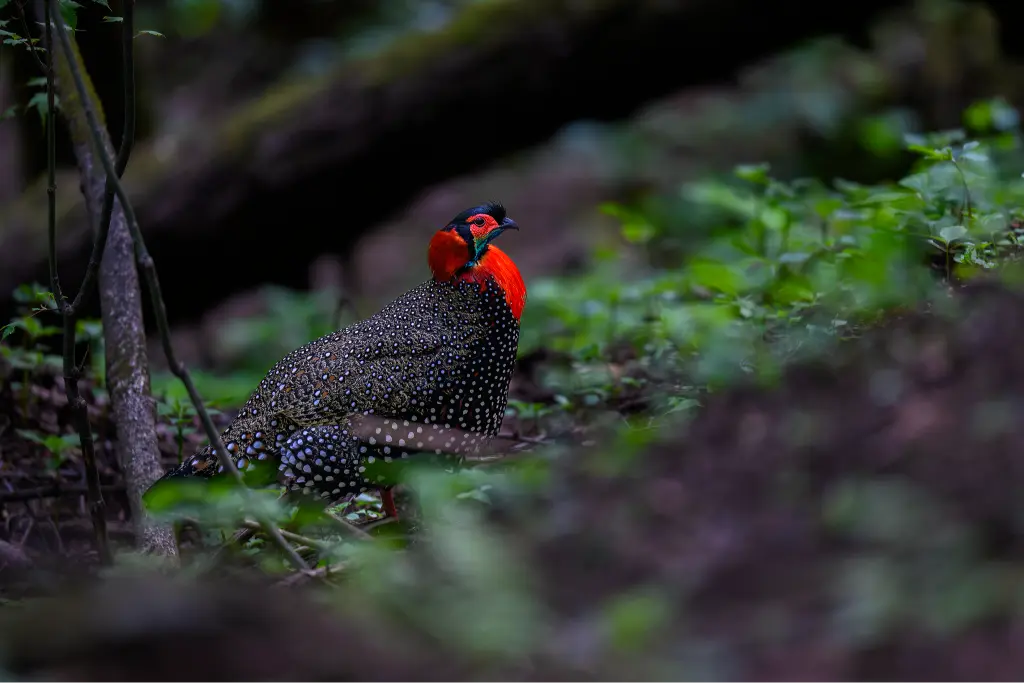
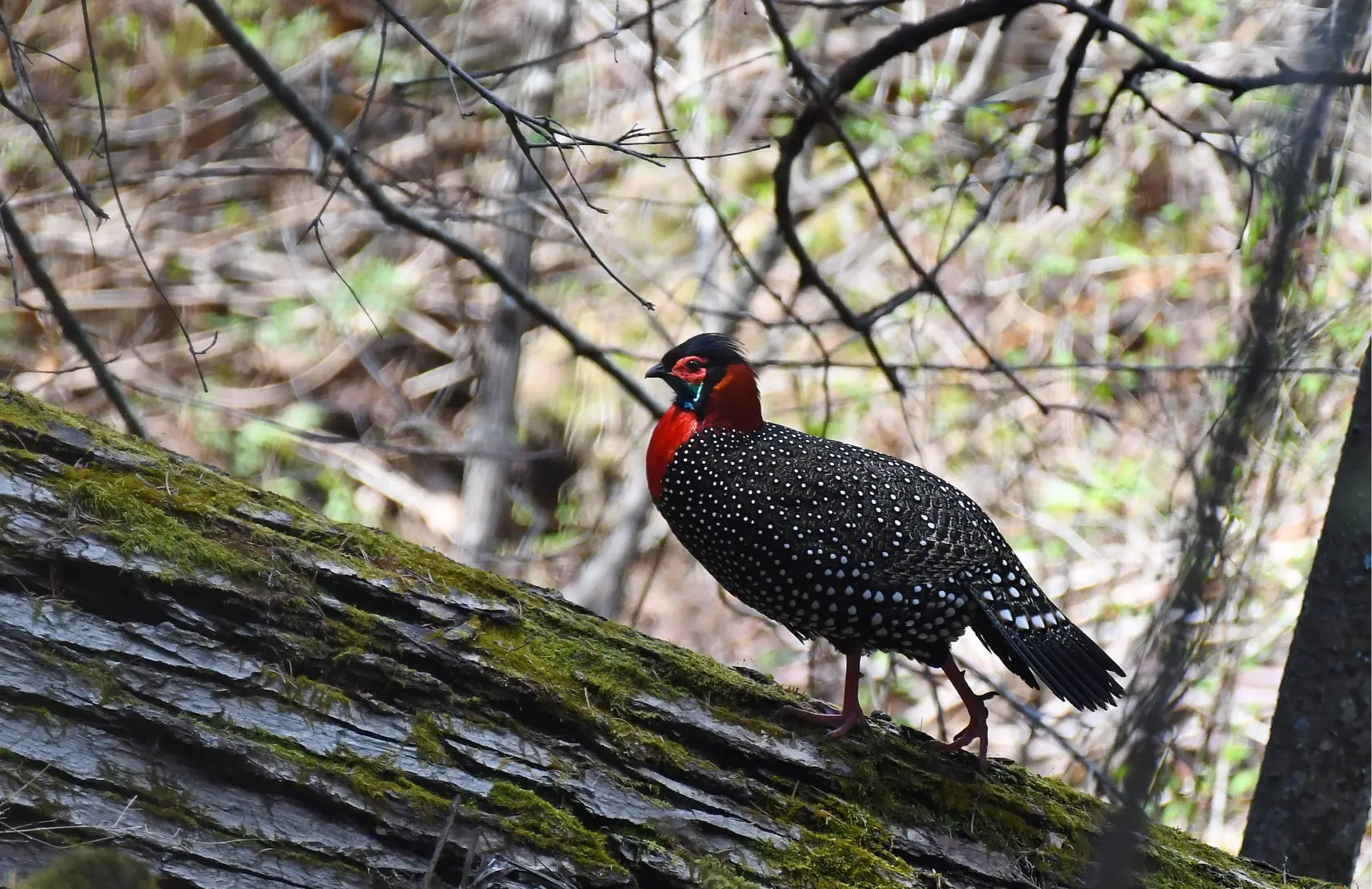
Somewhere in the oak and bamboo undergrowth of the Great Himalayan National Park lives a bird most Indian birders will only ever see in a field guide. The Western Tragopan — Jujurana, “King of Birds” — is one of the rarest pheasants on earth, a crimson-and-black ghost of the western Himalaya that spends its life in steep, silent forest and rarely gives anyone more than a few seconds of its time. This expedition is built around exactly one goal: giving you the best realistic chance of finding it.
We head into the Sainj Valley, the quieter of GHNP’s two access valleys and, by most local accounts, the better one for the tragopan. This is a UNESCO World Heritage core zone — no roads, no crowds, just river trails, oak-conifer forest, and camp life. From our base at Humkani we spend two full days working the surrounding ridges and ravines at dawn and dusk, the hours when tragopans call and occasionally step into view. Along the way, the valley hands out a proper Western Himalayan pheasant sweep — Koklass and Kalij are near-certainties, Himalayan Monal is common, and Cheer Pheasant is a realistic bonus — alongside raptors, rosefinches, laughingthrushes, and the kind of forest birding that rewards patience over ticking.
This is a trekking expedition, not a drive-and-photograph tour. Expect 6–12 km walking days on mountain trails, tented camps inside the park, and a small, dedicated team looking after logistics so all you have to do is watch the forest. It’s demanding, it’s real, and if the jujurana shows itself, it’s the kind of sighting that stays with you for good
Trip Highlights
- Dedicated search effort for the Western Tragopan in its finest stronghold, the Sainj Valley core zone of GHNP
- Chances of Koklass Pheasant, Kalij Pheasant, and Himalayan Monal, with Cheer Pheasant possible en route
- Two full days based at Humkani, deep inside the park, purely dedicated to the tragopan search
- Trekking and camping through pristine oak, conifer, and rhododendron forest inside a UNESCO World Heritage Site
- Small group, full camping support — tents, meals, and a dedicated ground team throughout
- Away from Tirthan Valley’s crowds — Sainj remains one of the least-visited corners of GHNP
Target and possible sighting Species
Western Tragopan,Kalij Pheasant, Himalayan Monal, Cheer Pheasant (possible), Himalayan Griffon, Bearded Vulture, Golden Eagle, Speckled Wood Pigeon, Spotted Nutcracker, Yellow-billed Blue Magpie, Grey-crested Tit, White-throated Bushtit, White-cheeked Nuthatch, Long-billed Thrush, Western Crowned Warbler, Rufous-breasted Accentor, Collared Grosbeak, Spot-winged Grosbeak, Pink-browed Rosefinch, and a good supporting cast of Himalayan forest birds. Himalayan Tahr and Goral chances are also there along the trail, with Himalayan Black Bear and Musk Deer as lucky extras.
Image Gallery
Itinerary
Day 1: Arrival in Chandigarh, drive to Sainj Valley
Pick-up from Chandigarh and a scenic drive of roughly 8–9 hours via Bilaspur, Sundernagar, Mandi, and Aut into the Sainj Valley, arriving at GHNP by around 10 pm.
Overnight at Ropa.
Day 2: Sainj to Shakti (Trek: 12 km)
Our trek into the core zone begins. From Sainj we walk alongside the river through dense oak and conifer forest to the trekkers’ camp at Shakti, our first night under canvas inside the park. Birding along the trail as we go.
Overnight in Shakti Village.
Day 3: Shakti to Humkani (Trek: 6 km)
A shorter, steeper climb through thick forest to Humkani, our base camp for the tragopan search. This stretch is prime pheasant country — keep eyes and ears open for Koklass and Monal en route.
Overnight camping at Humkani.
Day 4: Humkani: full day for the Western Tragopan
A full day dedicated entirely to the search. We work the ridgelines and ravines around Humkani at first light and again at dusk — the hours the tragopan is most likely to call and move. Between sessions, the surrounding forest offers steady birding: Monal, nutcrackers, tits, rosefinches, and raptors overhead.
Overnight camping at Humkani.
Day 5: Humkani search continues; trek to Shakti (6 km)
One more push in the early hours around Humkani before we begin the walk back down to Shakti, birding as the forest changes character on the descent.
Overnight camping at Shakti.
Day 6: Shakti to Sainj (Trek: 12 km)
The trail retraces our route out of the core zone back to Sainj, with one last day of forest and riverside birding.
Overnight at the guest house in Sainj.
Day 7: Drive to Chandigarh, Departure
An early start for the drive back to Chandigarh (approx. 8–9 hours), timed for your onward flight or train.
Important Notes
- Best time: Mid April to Mid May, timed to peak tragopan calling activity before the onset of summer haze.
- Trekking level: Moderate to demanding — daily walks of 6 to 12 km on mountain trails, with camping at altitude and no road access once inside the park.
- Accommodation: Guest house at Ropa/Sainj on arrival and departure nights; dome/trekking tents with sleeping bags at Shakti and Humkani.
- Meals: All meals included through the trek — breakfast, packed lunch, and dinner, prepared by our camp crew.
- Team & support: A full ground team of guides, naturalists, and camp staff (5 in total) accompanies the group, along with all trekking and camping gear.
- Connectivity: Mobile network is patchy to non-existent once past Sainj town — plan for a genuine digital detox.
- Group size: Kept deliberately small, since a quiet trail is half the battle when you’re hunting for the shyest pheasant in the Himalaya.
A note on sightings: the Western Tragopan is one of the most difficult birds in the Indian subcontinent to see well. Our itinerary is built to maximise your chances — two full days in prime habitat, experienced local trackers, and dawn-to-dusk effort — but no responsible operator can guarantee a sighting of this bird. What we can guarantee is a genuine, well-run expedition into one of the last untouched corners of the Western Himalaya.