Finn's Weaver Monsoon Birding Tour: 2 Nights/3 Days
No. of days
3
Trip Type
Birding
Activity Level
Easy to Moderate
Experiences
Best time
July to September (Monsoon)
Region
Request free consultation
Our travel planning team will contact you to provide personalized guidance. Submission confirms your acceptance of our privacy policy.
Overview
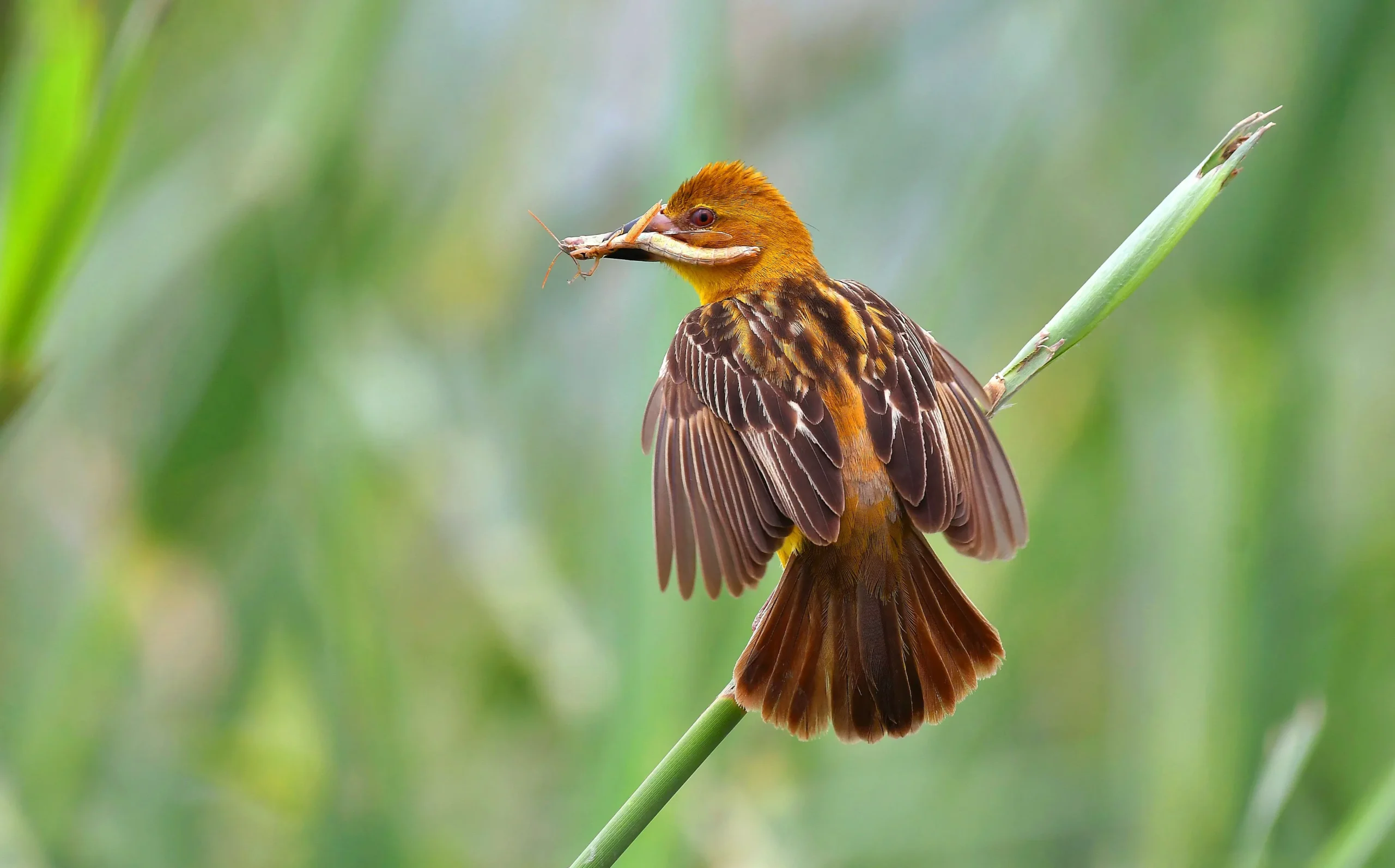
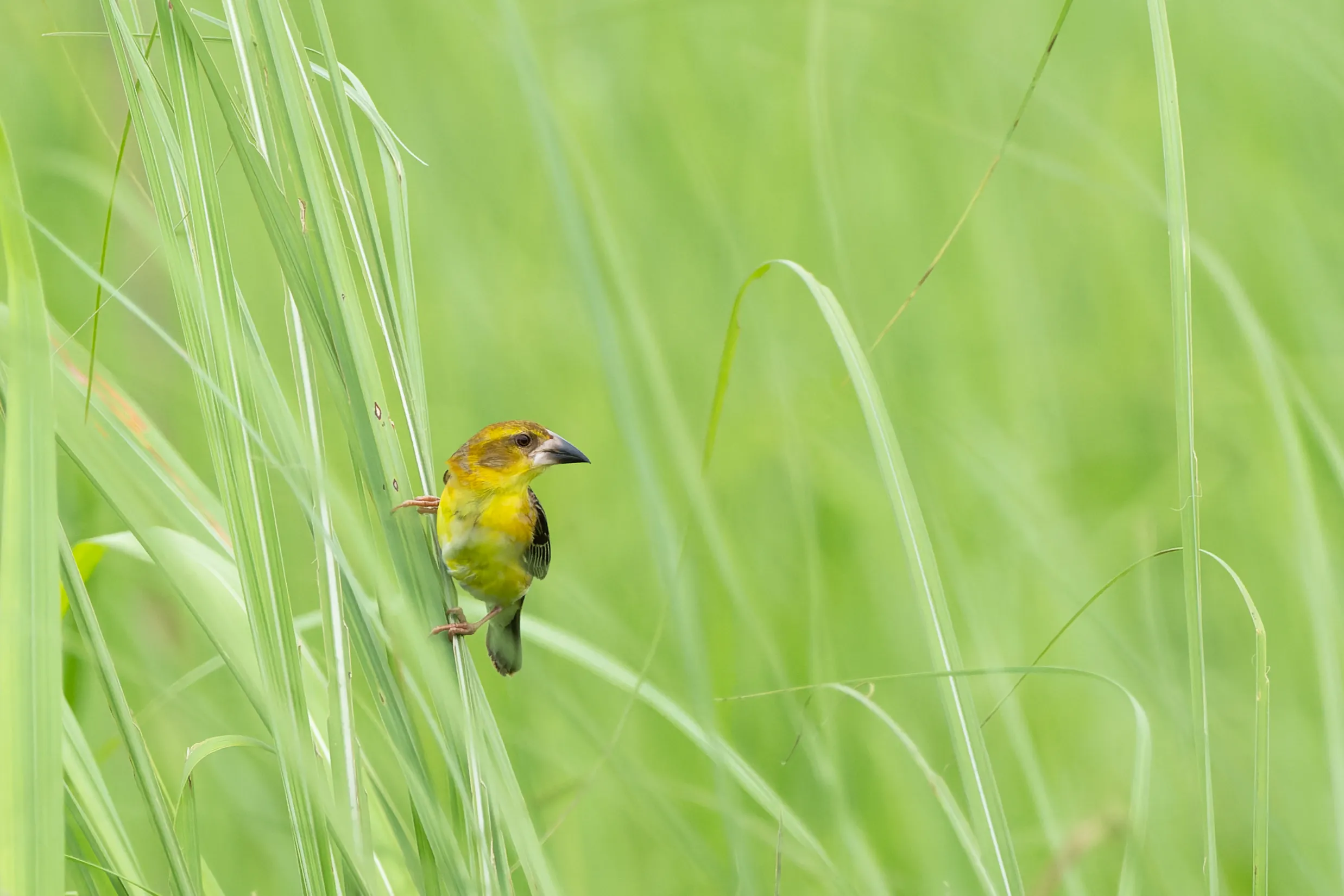
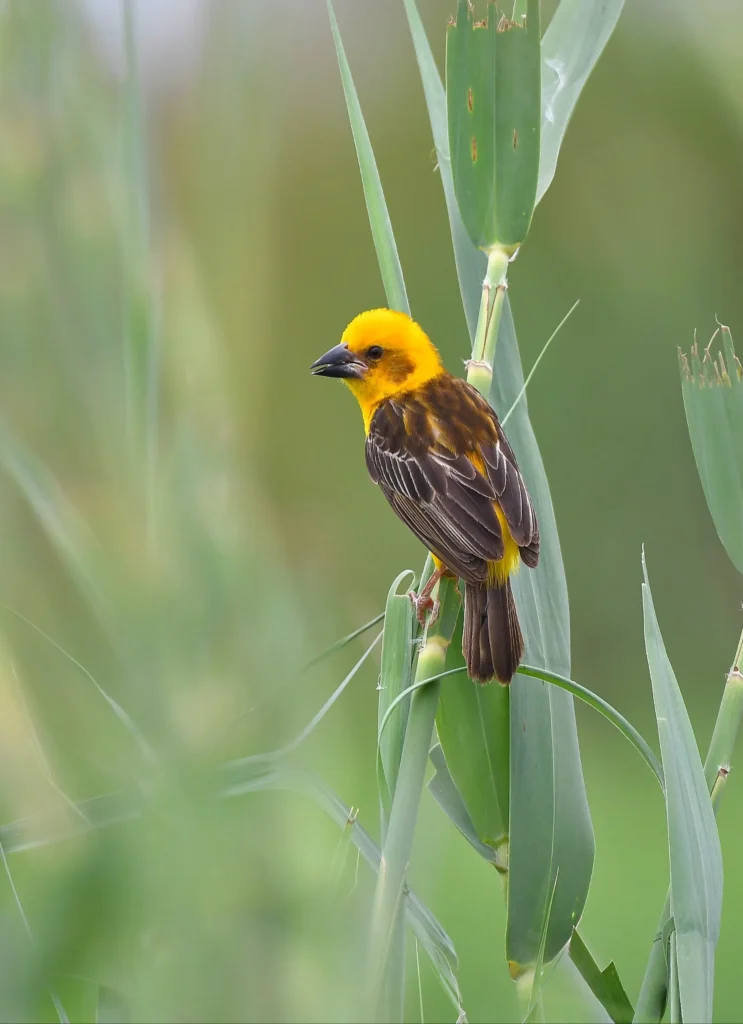
Finn’s Weaver is only seen during the monsoon — for the rest of the year, it disappears back into the tall Terai grass and is almost impossible to find. Also known as Finn’s Baya or the Yellow Weaver, it is one of the rarest birds in the world, found nowhere else on Earth except a handful of scattered sites across India and Nepal. Its entire global population is now estimated at only a few thousand birds, and it is officially listed as Vulnerable on the IUCN Red List, with several conservationists calling for it to be uplisted to Critically Endangered.
The bird’s story is tied completely to the Terai — the belt of marshy grassland and reservoirs running along the Himalayan foothills of Uttarakhand, western Uttar Pradesh, and lowland Nepal. During the breeding season (roughly May to September), male Finn’s Weavers build hanging, retort-shaped nests in colonies, usually low over water or reeds and in tall trees such as Semal (silk cotton) and Shisham (rosewood) close to the water’s edge. Nesting in a flock like this offers some safety in numbers, though even so, colonies are frequently raided by crows, and if disturbed, the birds often abandon the site entirely and do not return. Genuine Terai grassland and wetland habitat like this is disappearing fast — drained for farmland, harvested too early for the birds to use the grass, or altered by changes in water management around dams and reservoirs — which is exactly why Finn’s Weaver has vanished from so many of its historic sites and is now found reliably in only a handful of places anywhere in the world.
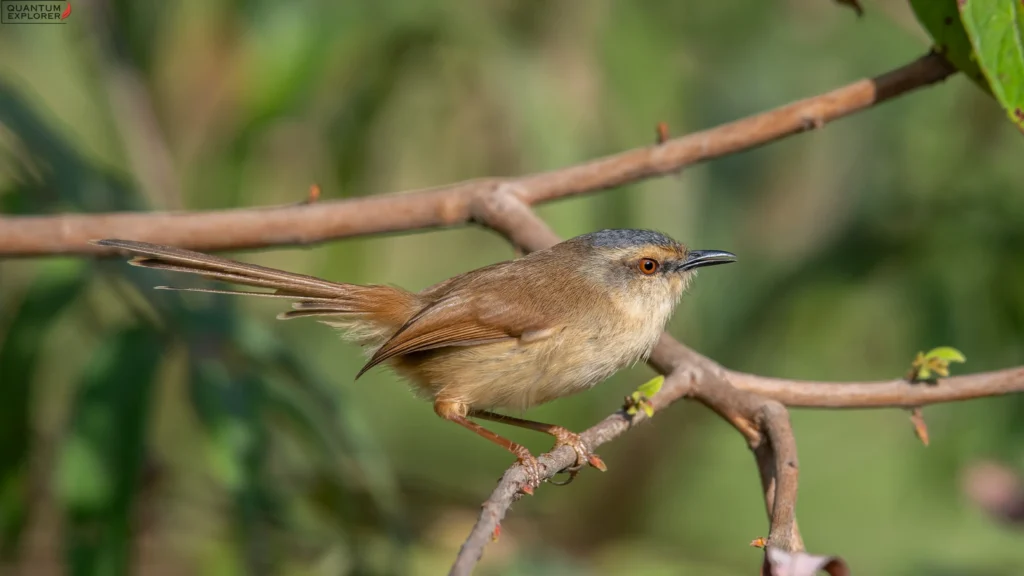
Baur (Haripura) Reservoir, on the Terai plains near Corbett, is today considered the best and most reliable site in the western Himalayan region to see and photograph Finn’s Weaver, and this short monsoon tour is built entirely around giving you the best chance at this exceptional bird. If we complete our main target early, we shift focus to two other outstanding regional specialities — the Great Slaty Woodpecker, the largest woodpecker species alive in the world today, found around the sal forests of Kaladhungi, and the Grey-crowned Prinia, a scarce, range-restricted grassland bird found along the Kotabagh road, with a global population estimated at under 10,000 birds and a total range confined to the Himalayan foothills of India, Nepal and Bhutan.
Trip Highlights
- Search for the extraordinary Finn’s Weaver, one of the world’s rarest birds, found only in India and Nepal and visible only during the monsoon breeding season.
- Watch weaver colonies at their hanging, retort-shaped nests over water at Baur (Haripura) Reservoir, the best site for the species in the western Himalayas.
- Look for the Great Slaty Woodpecker, the largest woodpecker in the world, in the sal forests around Kaladhungi.
- Search the grassland along Kotabagh road for the scarce, range-restricted Grey-crowned Prinia.
- Explore the wetland habitat of Baur Reservoir for a wide range of monsoon waterbirds and grassland species.
- A focused, high-value 2N/3D format timed to the peak weaver breeding season.
Image Gallery
Itinerary
Day 1: Arrival at Corbett Outskirts - Baur (Haripura) Reservoir
We arrive at the outskirts of Corbett and check in to our resort. In the afternoon, we head straight to Baur (Haripura) Reservoir, our main site for the tour’s principal target, Finn’s Weaver. We spend the session watching the colony’s nesting activity and the males’ distinctive courtship behaviour around their hanging nests. While at the reservoir, we also look for a good range of monsoon wetland and grassland birds, including Great Crested Grebe, Pheasant-tailed Jacana, Bronze-winged Jacana, Baya Weaver, Black-breasted Weaver, Jungle Bush Quail, Rock Bush Quail, Striated Grassbird, Streaked Weaver and various herons, egrets and wintering waterfowl around the reservoir’s edges.
Overnight at Corbett outskirts.
Day 2: Baur Reservoir - Kaladhungi
We return to Baur Reservoir for a further morning session with the Finn’s Weaver colony, making the most of the early light for photography. If our target is completed early, we shift attention to the reservoir’s other grassland and wetland specialities. In the afternoon, we drive to Kaladhungi, birding through its sal forest patches for the Great Slaty Woodpecker — the largest woodpecker species in the world, easily recognised by its long neck, slate-grey plumage and peach-toned throat, usually seen moving through the canopy in small, noisy family groups. Kaladhungi’s forest is also good for other woodpeckers, barbets, drongos and typical Terai forest birds.
Overnight at Corbett outskirts.
Day 3: Kotabagh Road - Departure
We head out early to bird along Kotabagh road, home to the scarce and highly localised Grey-crowned Prinia, a small grassland specialist found in only a handful of sites across the Himalayan foothills of India, Nepal and Bhutan. We also spend time looking for other grassland and scrub species typical of this habitat, along with any remaining targets from earlier in the tour. After breakfast, we conclude the tour and depart from Corbett.