
Green Avadavat - Mount Abu Birding Tour: 2 Nights/3 Days
No. of days
3
Trip Type
Birding
Activity Level
Easy to Moderate
Best time
Region
Rajasthan, Aravalli Range
Start & End
Request free consultation
Our travel planning team will contact you to provide personalized guidance. Submission confirms your acceptance of our privacy policy.
Overview
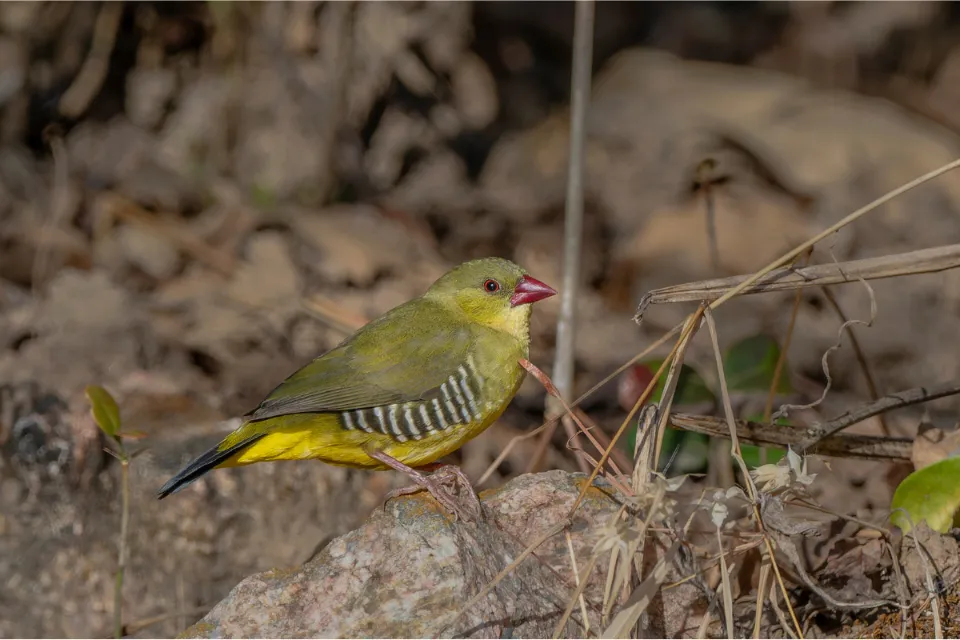
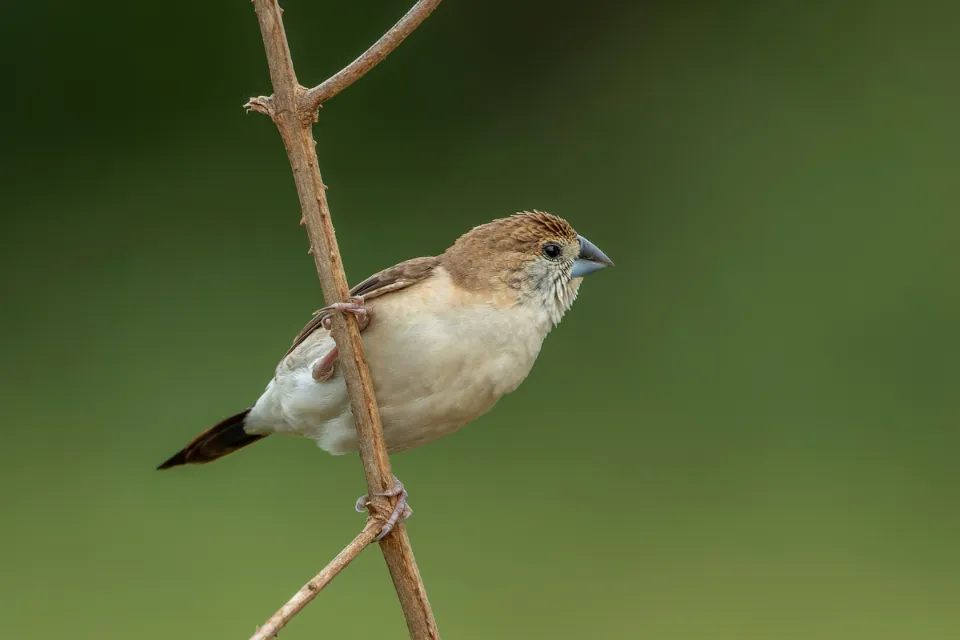
Mount Abu is Rajasthan’s only hill station, rising to about 1,220 metres above the surrounding Aravalli desert. The Mount Abu Wildlife Sanctuary, which wraps around the hill station, is home to over 250 recorded bird species and is one of the best places to see the endangered Green Avadavat, an Estrildid finch found year-round in the sanctuary’s scrub and fields, especially in its northern reaches. The Green Avadavat is found natively in only one country in the world — India. While historically reported in parts of Pakistan, those populations have disappeared, making it a restricted-range species unique to India today, and Mount Abu is one of the very few reliable places to see it. It is classified as Vulnerable on the IUCN Red List, with a declining population confined to this extremely restricted range. Other finches of the same family found here include Indian Silverbill (White-throated Munia) and Scaly-breasted Munia, alongside the more widespread Red Avadavat.
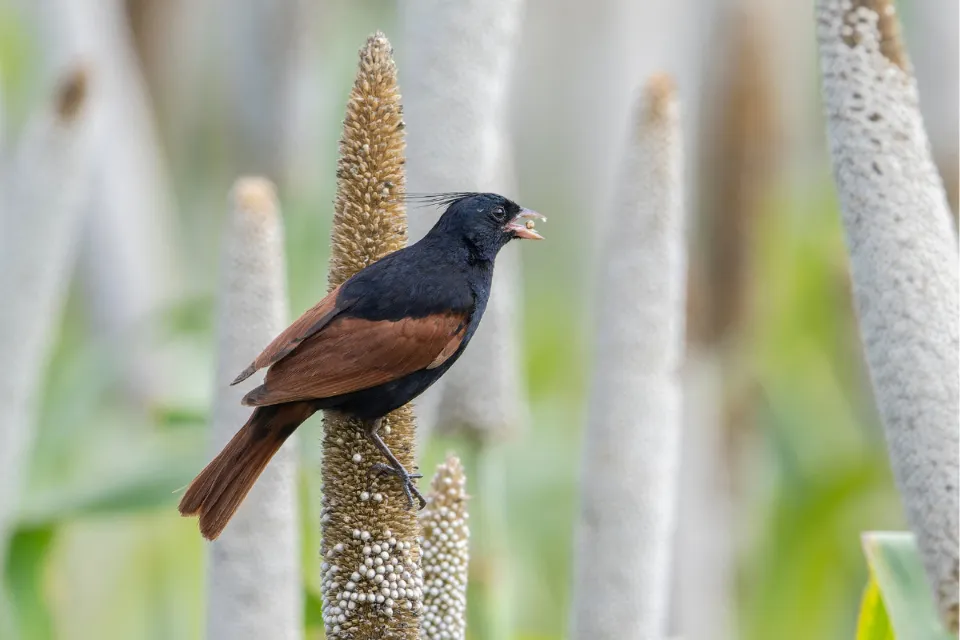
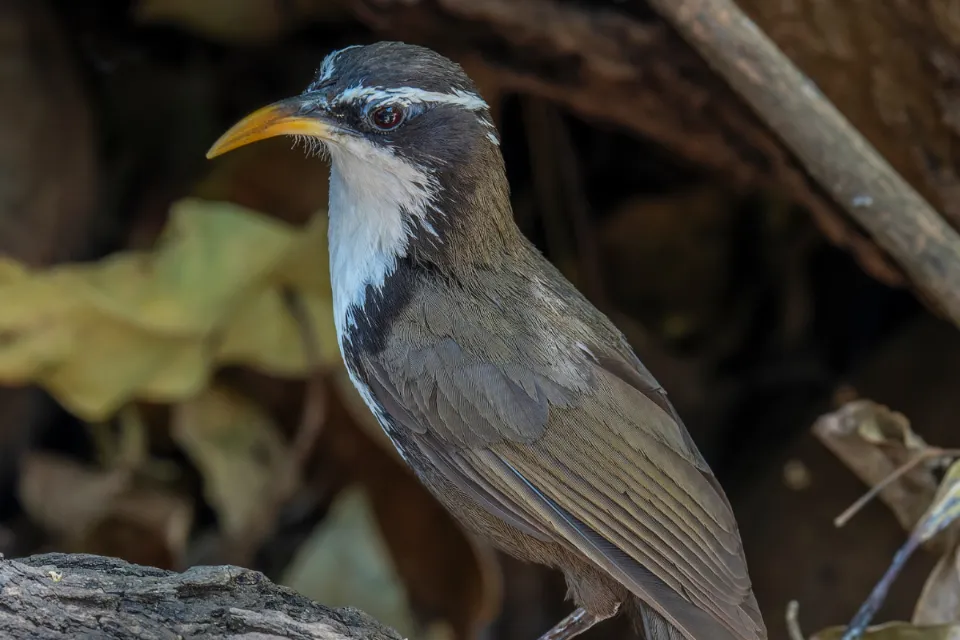
Beyond the avadavat, this compact tour covers a genuinely varied mix of habitats in a short time — open scrub and fields on the plateau, forest trails through the sanctuary, and the reed-fringed edges of Nakki Lake — bringing together dry-country specialities like Crested Bunting and Brown Rock Chat, forest skulkers like Indian Scimitar Babbler and Tawny-bellied Babbler, and wintering waterfowl on the lake.
Alongside the birding, the sanctuary also holds a good variety of mammals. Good chances of Sloth Bear sightings are frequent. Other species recorded here include Indian Leopard, Sambar, Chinkara, Wild Boar, Common Langur, Jungle Cat, Small Indian Civet, Striped Hyena, Indian Fox, Common Mongoose, Indian Pangolin, Indian Porcupine, Indian Hare and Hedgehog — though Leopard sightings within the sanctuary itself are uncommon and are more likely on a dedicated jeep safari in Jawai-Bera, located just 2.5-3 hours away, than during regular birding walks at Mount Abu.
Jawai-Bera is one of India’s most unique wildlife spots, set among big granite hills and rocky outcrops in the Aravalli range. Unlike India’s forested tiger and leopard reserves, the leopards here live out in the open, denning in caves among the boulders and often seen resting in the sun during the day. They have lived alongside the local Rabari shepherd community peacefully for generations. This makes Jawai one of the best places in India to reliably see and photograph wild leopards outside a forest reserve. Jawai Dam itself is also good for waterbirds, and you may also spot Mugger Crocodile, Striped Hyena and Jungle Cat here.
This is an ideal short add-on for birders travelling through Rajasthan or Gujarat, easily combined with wider Western India birding circuits.
Trip Highlights
- Target the endangered Green Avadavat, one of Mount Abu’s star specialities and a genuine restricted-range finch.
- Search forest trails for Indian Scimitar Babbler, Grey Junglefowl and Red Spurfowl.
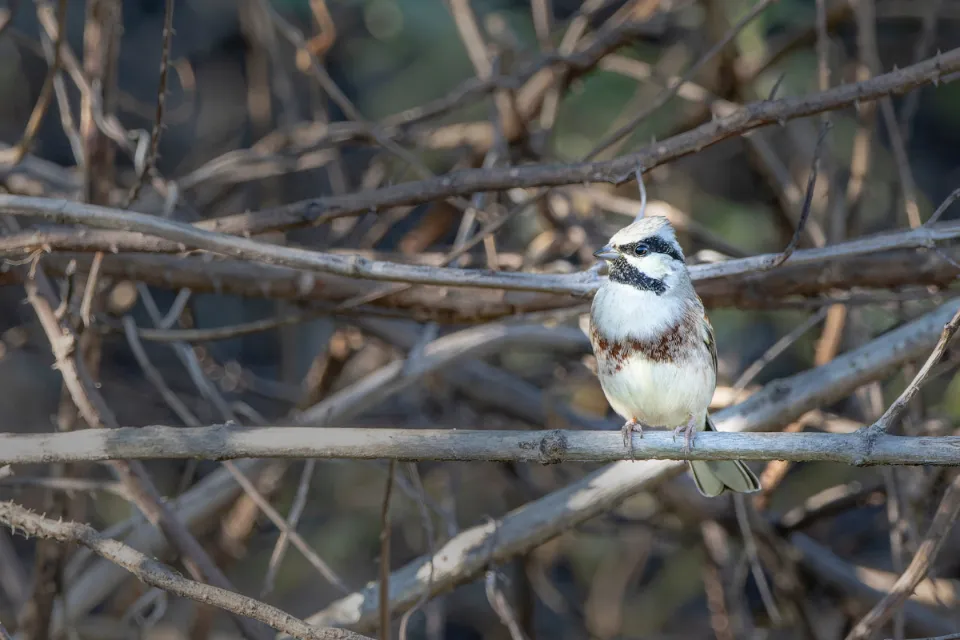
- Look out for Crested Bunting and White-capped Bunting in the open scrub and rocky slopes.
- Scan Nakki Lake for wintering waterfowl — Tufted Duck, Common Pochard, Northern Pintail, Mallard and Gadwall.
- Frequent sightings of Sloth Bear, alongside the birding, in the sanctuary.
- Optionally extend the tour to Jawai-Bera, just 2.5-3 hours away, for a dedicated leopard safari among its dramatic granite hills.
- Optional evening session for Oriental Scops-Owl, Spotted Owlet and Jungle Nightjar.
- A compact, easy-paced 2N/3D format — ideal as a standalone trip or an add-on to a wider Rajasthan/Gujarat birding circuit.
Image Gallery
Itinerary
Day 1: Arrival at Mount Abu
We arrive at Mount Abu and check in to our hotel. In the afternoon, we head out to bird the open scrub and fields on the plateau, one of the best spots for the sanctuary’s principal target, Green Avadavat, along with White-capped Bunting, Crested Bunting, Indian Silverbill, Indian Robin, Brown Rock Chat, Common Rosefinch, Siberian Stonechat, Small Minivet and Jungle Prinia. Towards evening, we bird the edges of Nakki Lake for wintering waterfowl including Little Grebe, Tufted Duck, Common Pochard, Northern Pintail, Mallard, Gadwall and White-throated Kingfisher.
Overnight at Mount Abu.
Day 2: Full-Day Birding Around Mount Abu Wildlife Sanctuary
We spend a full day exploring the forest trails and interior of the sanctuary, its most productive birding area. Our targets include Indian Scimitar Babbler, Grey Junglefowl, Red Spurfowl, Jungle Bush Quail, Painted Francolin, Brown-headed Barbet, Coppersmith Barbet, Indian Yellow Tit, Brown-capped Pygmy Woodpecker, Yellow-crowned Woodpecker, White-naped Woodpecker, Oriental Turtle Dove, Oriental Magpie Robin, Plum-headed Parakeet, Alexandrine Parakeet, Red-breasted Flycatcher, Red-whiskered Bulbul, Rufous Treepie, Spotted Dove, Tawny-bellied Babbler, White-spotted Fantail, Yellow-eyed Babbler, White-bellied Drongo, Greenish Warbler, Hume’s Warbler and Sulphur-bellied Warbler. Overhead, we keep an eye out for raptors such as Shikra, Common Buzzard and Bonelli’s Eagle, and we’re likely to run into Sloth Bear through the day. We can also arrange an optional evening session for Oriental Scops-Owl, Spotted Owlet and Jungle Nightjar.
Overnight at Mount Abu.
Day 3: Final Birding and Departure
We enjoy a final morning of birding around Mount Abu to catch up with any species we may have missed earlier — a last chance for Green Avadavat, Crested Bunting and any remaining forest or scrub targets, including Common Kestrel. After breakfast, we depart from Mount Abu.
The tour concludes at Mount Abu.